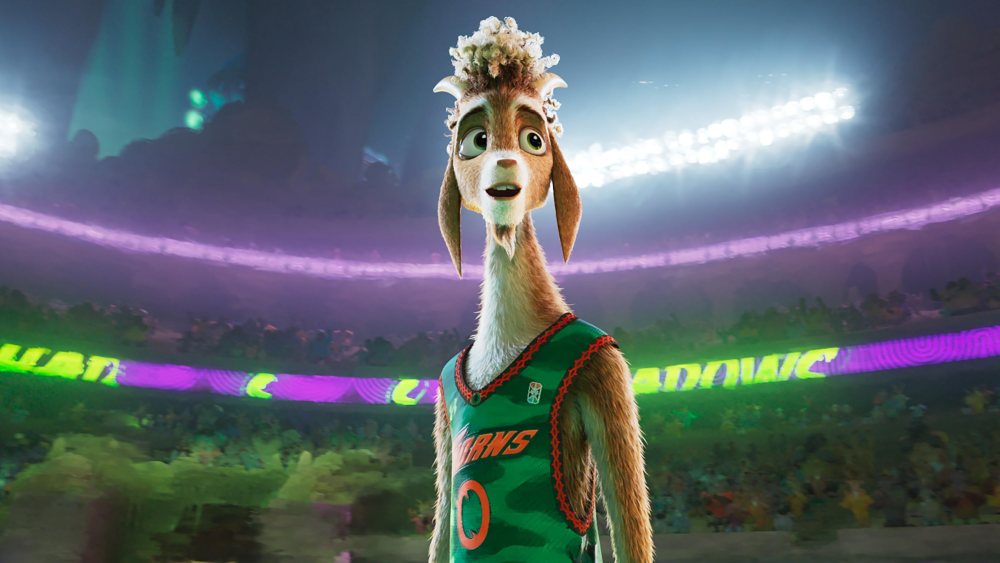
GOAT Review: Why This Animated Sports Film Isn't The G.O.A.T.
The cinematic landscape is no stranger to animated tales of anthropomorphic animals pursuing their dreams, especially in the realm of sports. From a quick glance, *GOAT*, an animated film centered around a fierce sport called "roarball," seems poised to join this proud tradition, perhaps even aiming for the titular "Greatest Of All Time" status. Directed by Tyree Dillihay, this energetic outing seeks to deliver a high-octane experience. However, despite its splashy animation and a few commendable narrative choices, our comprehensive
Goat Review reveals that this film, while intermittently entertaining, ultimately falls short of being a true G.O.A.T. masterpiece, largely due to its reliance on familiar tropes and a chaotic execution that drowns out its potential heart.
A Promising Start: Challenging Norms (Briefly)
One of *GOAT*'s most refreshing and genuinely innovative moments arrives right at its opening. The film introduces us to its protagonist, Will Harris, as a young kid, captivated by his idol, the legendary Jett Fillmore (voiced by Gabrielle Union), a female star preparing to dominate the roarball arena. This dynamic, set a decade before the main narrative, is strikingly unique. In a world where professional sports often reflect and reinforce gender bifurcation, *GOAT* immediately upends this expectation by showcasing a female athlete as the undisputed hero, revered by all, regardless of gender.
This initial sequence is not just a clever pun (a "young kid" goat) but a powerful statement, instantly establishing a world that dares to defy traditional sports cinema conventions. It’s a moment of pure, unadulterated potential, hinting at a narrative that could truly break new ground. This bold choice felt like a breath of fresh air, suggesting a film ready to challenge norms and offer something genuinely different. However, as compelling as this unique premise is, it proves to be tragically short-lived. The energy and groundbreaking spirit of the prologue, unfortunately, fade into the background as the story progresses, ultimately being overshadowed by a far more conventional plot. This intriguing initial promise makes the film’s subsequent adherence to formula all the more disappointing, leaving viewers to wonder what could have been. You can read more about this specific aspect in
GOAT Film Review: Bold Gender Twist Lost in Predictable Plot.
Familiar Terrains: The Underdog Story Unpacked
Once the initial, innovative spark of the gender-fluid sports world dims, *GOAT* quickly settles into a narrative comfort zone that feels all too familiar. At its core, the film presents an archetypal underdog tale, a classic sports movie blueprint we've seen countless times, albeit with talking animals and a sport called "roarball." Roarball itself, despite its ferocious name and "wild terrains" – shifting from jungle settings to arctic ice experiences – essentially boils down to a high-speed, more aggressive version of basketball. This lack of true innovation in the sport's mechanics or presentation means that much of the excitement relies on spectacle rather than strategic depth or genuine novelty.
The story follows Will Harris (voiced by Caleb McLaughlin), a young goat with undeniable athletic talent and an unwavering dream of playing professional roarball. His aspirations, however, are constantly dismissed because he is one of society's "small" animals, deemed incapable of competing against the "bigs" – powerful species like rhinos and horses who dominate the sport. This central conflict, the small protagonist defying larger opponents, is a cornerstone of sports films, from *Rudy* to *Space Jam*, and *GOAT* offers little to distinguish itself within this well-trodden path. Will's struggles are compounded by financial woes, culminating in a significant setback when he loses all his money betting on himself in a one-on-one street game against the visiting roarball superstar, Mane Attraction (Aaron Pierre). Despite these challenges, Will, like every underdog before him, remains undeterred, eventually earning a shot to join his idol Jett Fillmore's team, the Thorns, only to be met with skepticism and laughter.
While the plot beats are predictable, the film does benefit from a reasonably strong voice cast. Caleb McLaughlin imbues Will with a determined spirit, and Gabrielle Union brings her usual charisma to Jett Fillmore. Aaron Pierre adds a formidable presence as Mane Attraction. These performances inject a degree of charm into their respective characters, helping to carry the weight of the familiar script. However, even strong voice acting struggles to elevate a narrative that rarely ventures beyond the expected.
More Noise Than Heart: The Chaotic Execution
Beyond its predictable narrative, perhaps *GOAT*'s most significant drawback is its often overwhelming and unlovable execution. The film feels as though it’s constantly operating at an eleven, creating a sensory overload that, for many, detracts from the viewing experience. Descriptions frequently refer to it as "noisy, chaotic, and unlovable," with the roarball games themselves being "deafening" and "pitched at lightning speed." Watching *GOAT* can be akin to standing next to a helicopter during takeoff – an intense, all-encompassing aural assault that makes it difficult to focus on character development or emotional beats.
This relentless pace and sonic barrage often bury the film's potential for genuine connection. While there are "some decent jokes" scattered throughout, they are frequently "lost in all the noise," becoming mere background chatter rather than impactful comedic moments. The lack of genuine heart and soul is particularly striking, especially given that the film boasts a real-life inspiration: basketball superstar Stephen Curry, who serves as a producer and has a performing role. Curry’s own career began with doubters who deemed him too small, a clear parallel to Will Harris's journey. Yet, despite this authentic connection, the film struggles to imbue its characters or their struggles with the emotional depth needed to truly resonate. This absence of palpable emotion makes it challenging for audiences to deeply invest in Will's journey or to feel the stakes of the roarball games beyond their superficial flash. As another reviewer put it, this film often feels like
GOAT Review: More Noise Than Heart in This Roarball Adventure.
Furthermore, criticisms extend to the film's apparent disconnect with its presumed target audience. For a movie "targeted at under-eights," the frequent depiction of characters checking mobile phones and social media feeds might feel less relatable and more like a forced attempt at modern relevance, potentially missing the mark for very young viewers who might not grasp these elements fully. The cumulative effect of the frenetic pace, overwhelming sound, and superficial emotional engagement means that, for many, the only thing that "lingers after leaving the cinema is a headache."
Why "GOAT" Falls Short of G.O.A.T. Status
So, why does *GOAT* ultimately fail to live up to the moniker of "Greatest Of All Time," even within its specific genre? It’s a confluence of factors that prevent it from achieving true distinction. The film's early promise of challenging gender norms quickly dissipates, replaced by a formulaic underdog narrative that, while not inherently bad, offers no new insights or innovative twists. The sport of roarball, despite its fantastical settings, essentially remains a re-skinned version of basketball, lacking the creative depth seen in truly imaginative animated worlds.
A G.O.A.T. film in animation, whether sports-centric or otherwise, typically excels in several key areas: originality in concept and execution, deep emotional resonance, memorable characters with compelling arcs, and a lasting impact that transcends its initial viewing. *GOAT* touches upon some of these – it has splashy animation and a capable voice cast – but it consistently prioritizes high-energy spectacle over substantive storytelling and emotional development. The "algorithmically generated" feel, as some critics have noted, suggests a film designed to hit familiar beats rather than forge its own path.
For filmmakers, the lesson here is clear: genuine heart, innovative world-building, and emotional depth are paramount. Flashy animation and a fast pace can entertain, but they cannot sustain a truly great story without a strong emotional core. For viewers, approaching *GOAT* with tempered expectations, viewing it as a loud, energetic, yet ultimately conventional animated sports film, might lead to a more enjoyable experience. It's a film that provides "enough humor and action to satisfy audiences of all ages," but it's "hard to really love because so much of it is too familiar."
In conclusion, *GOAT* makes a bold and refreshing start, hinting at a cinematic experience that could genuinely innovate within the animated sports genre. However, this initial promise quickly gives way to a predictable underdog story wrapped in a package that is often more chaotic than captivating. While it delivers on high-octane action and vibrant visuals, the film struggles to develop a unique identity or cultivate genuine emotional depth, ultimately preventing it from achieving the "G.O.A.T." status its title playfully suggests. It's a fun diversion for a rainy afternoon, but unlikely to leave a lasting impact on the hearts or minds of its audience.